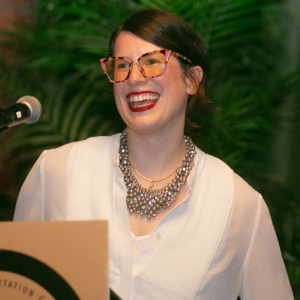

Thank you for the opportunity to testify. My name is Jaqi Cohen, and I am the Director of Climate and Equity Policy for Tri-State Transportation Campaign, an advocacy organization that has championed sustainable, equitable, and safer mobility in New York, New Jersey, and Connecticut since 1993.
NYSDOT Capital Budget: Stop Highway Widening
NYSDOT continues to allocate billions of dollars to widen urban highways like the Cross Bronx Expressway in the Bronx, Route 17 in Orange and Sullivan counties, the Van Wyck Expressway in Queens, and other expansions throughout the state. These projects are based on outdated planning that has been repeatedly discredited. Highway widening does not reduce congestion, it induces more traffic, increases emissions, and worsens air quality in communities already overburdened by pollution1.
Research demonstrates that highway widenings worsen air and water quality, exacerbate flood risk, and accelerate climate change through increased driving. Now is the time to invest those dollars in projects that actually improve quality of life: fixing existing roads and bridges, expanding transit service, and building safe bike and pedestrian infrastructure.
TSTC recommends:
● Establishment of clear criteria prioritizing maintenance over expansion in all highway spending
● Required climate impact analysis for all transportation projects over $1 million
● Reallocation of highway expansion funding toward community-centered solutions that do not increase vehicle capacity
● Immediate release of the complete NYSDOT capital plan project list on data.ny.gov
Pass the Get Around New York Act (S4044/A4230)
This legislation would set a statewide target to reduce vehicle miles traveled by 20% by 2050 and require VMT assessments for highway expansion projects. It’s a critical tool to ensure transportation projects align with our climate goals or include real mitigation measures like transit and active transportation infrastructure.
TSTC recommends:
● Passage of the Get Around New York Act (A4230/S4044) to hold NYSDOT accountable and ensure our transportation investments support climate action, not undermine it
Fund Fast and Frequent Public Transit Statewide
After last year’s historic MTA funding package, we must ensure all New Yorkers, including those outside the MTA’s service area, have access to reliable transit. Non-MTA transit systems across the state need sustained investment to maintain and optimize service.
TSTC recommends:
● A 15% increase in STOA funding for non-MTA systems in FY 2026-27, with continued growth in following years
● Continuation of $245.5 million in capital funding for non-MTA transit systems to replace aging vehicles, modernize infrastructure, and accelerate the transition to zero-emission fleets
Restore Weekend G Train Service to Forest Hills
Transit planning in New York City has centered on Manhattan for too long. Queens and Brooklyn residents deserve direct connections that don’t force them through circuitous routes or rely on limited bus options. Restoring weekend G train service to Forest Hills is an achievable, affordable way to fundamentally improve mobility across the outer boroughs.
The G train has seen remarkable growth—weekday ridership has surged to 166,000 passengers, an increase of 50,000 riders since 2010, making it one of the fastest-growing lines in the system2. This reflects the reality of how New Yorkers live and work today, with more housing, employment, and activity along the corridor and more trips staying within Brooklyn and Queens.
Weekend service to Forest Hills would serve critical destinations including LaGuardia Community College, Elmhurst Hospital, LaGuardia Airport, and Forest Hills Stadium. It would be transformative for shift workers—restaurant workers, healthcare workers, retail employees—who need efficient ways to reach jobs on weekends when service is often reduced. It would also create new transfer opportunities at major bus hubs like Jackson Heights-Roosevelt Avenue, expanding access across both subway and bus networks.
TSTC recommends:
● The MTA should prioritize restoring weekend G train service to Forest Hills, and the budget should support making it happen
Climate and Electrification Funding
The state’s investment in transportation electrification continues to fall short of what’s needed to meet New York’s climate commitments. Medium and heavy-duty vehicles are responsible for approximately 24% of greenhouse gas emissions from the on-road vehicle fleet.
TSTC recommends:
● Investment in fast charging infrastructure for medium and heavy-duty vehicles to support New York’s commitment to electrify trucks and buses
● Expansion of NYSERDA’s clean transportation programs, which are delivering results in cleaner air, reduced emissions, and good jobs—especially critical as federal support for clean transportation comes under attack
Pass the Clean Deliveries Act (S.1180/A.3575)
The CLCPA mandates an 85% reduction in economy-wide greenhouse gas emissions by 2050, with priority given to disadvantaged communities. The transportation sector accounts for almost a third of New York’s climate-disrupting emissions, and e-commerce warehouses are a major contributor to this problem.
E-commerce warehouses are subject to no state-level permitting or oversight regarding the emissions they generate. They are a large source of indirect air pollution and are disproportionately sited in disadvantaged communities already overburdened with emissions from transportation and other industrial sources. These facilities can often be built without any public participation or formal review of potential impacts3.
The Clean Deliveries Act would create facility-by-facility review for new or existing e-commerce warehouses 50,000 square feet or greater. It would require facilities to implement Air Emissions Reduction Plans with mitigation measures based on their emission levels, with enhanced mitigation near sensitive receptors. The bill would also require DEC to produce a Zero Emissions Zones Study to reduce medium and heavy-duty vehicle emissions, especially in disadvantaged communities, and introduce annual reporting requirements to add transparency to an industry state regulators currently lack insight into.
TSTC recommends:
● Passage of the Clean Deliveries Act (S.1180/A.3575) to mitigate impact of last-mile deliveries on disadvantaged communities
Restore the Sustainable Futures Program
Last year’s $1 billion Sustainable Futures Program was the largest climate investment in New York’s history. It delivered real results: union jobs, energy efficiency upgrades for low- and moderate-income households, thermal energy networks on SUNY campuses, and cleaner air for school children. These are exactly the kinds of investments that improve air quality, support energy affordability, and build the infrastructure our communities need to thrive.
The Executive Budget’s failure to renew this program is a major disappointment. At a moment when the federal government is abandoning climate and clean energy investments, New York needs to lead—not retreat.
TSTC recommends:
● The Legislature should restore funding for the Sustainable Futures Program in their one-house budgets to maintain momentum on public health, economic development, and climate action
Conclusion
This budget is an opportunity to invest in transportation that works for New Yorkers—not more of the same failed highway projects. I urge the Legislature to reject highway widening, restore critical programs and services, pass the Clean Deliveries Act and Get Around New York Act, fund fast and frequent transit statewide, and invest in the clean, equitable transportation system our communities deserve.