The following is a first-person account by Tri-State’s new Albany legislative advocate, Nadine Lemmon.
Lemmon.
I joined TSTC last week, and will be based in Albany working on sustainable transportation policies—helping to ensure safer streets, improved bus service, and adequate transit funding for all New Yorkers. Once a week on MTR, I’ll be [...]
NJ Transit’s $1.79 billion FY 2010 operating budget, approved last week, avoids a fare hike and major service cuts despite a $62 million reduction in state operating aid. NJ Transit is filling the gap by slashing administrative costs, a laudable achievement, but one that may be hard to repeat in future years.
MTR has written before that the bigger problem is that NJ Transit lacks a dedicated source of operating funding and must annually go begging to the state legislature. Because the legislature consistently underfunds the agency, NJ Transit diverts significant funding from its capital budget to operations. In the most recent budget, diverted capital funds made up 21% of the operating budget — over $350 million in mostly borrowed money that should be going towards maintenance, new buses and train stations, and the like.
Transit agencies across the country, including those listed below, are grappling with budget cuts and rising operating costs. But NJ Transit is the largest transit provider in the country without a dedicated source of operating funds, making it especially vulnerable to fiscal woes. Here’s how some of NJ Transit’s peers keep their buses and trains running.
 All figures are from 2007, the most recent year in the FTA's National Transit Database. (Note that California no longer has a dedicated state transit tax -- see below.)
Chicago’s Regional Transit Authority
The RTA was established in 1974 to provide oversight of Chicago’s transit system. A decade later, the RTA’s responsibilities shifted giving it authority over the operating and fare responsibilities for the Chicago Transit Authority, Metra commuter rail and Pace suburban bus. At that time, a county sales tax was enacted to support transit operations, and a state match of 30% of tax revenues was imposed. Cook County’s rate was set at a higher level (now 1 and 1/4 cent after a 2008 increase) than the surrounding 5 counties (now 3/4 cent) and one-third of the suburban tax revenues was set aside for the suburban counties. The tax currently brings in about $1 billion annually.
More recently, the state legislature passed in January 2008 a real estate transfer tax in the City of Chicago, which brings in between $20 and $100 million annually. The state match for both taxes amounts to approximately $300 million.
Importantly, the law which established the RTA requires that half of operating expenses be serviced through fares, advertising, investment income and concessions. This forces the RTA to periodically raise fares.
Read about Boston and Los Angeles after the jump.
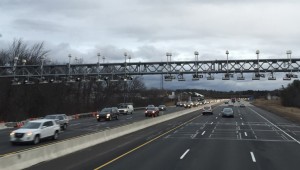
A conversion of carpool lanes to high-occupancy toll lanes could have potential for Connecticut.
Today, Tri-State joined a coalition of civic, environmental, and transportation groups that called on elected officials to implement congestion pricing on Connecticut’s roads. The Connecticut Joint Committee on Transportation will hear a congestion pricing bill within the next two [...]
Governor Rell announced her budget for fiscal years 2010 and 2011 last Wednesday in Hartford. With Connecticut facing a $922 million deficit, her proposal was mainly a laundry list of spending cuts, fee increases, and agency consolidations. With the exception of a speed camera pilot program, however, Governor Rell offered little vision on how [...]
Today the House Appropriations Committee released a summary of the House version of the American Recovery and Reinvestment Bill of 2009, the proposed federal stimulus legislation. The announcement says the legislation will be considered in the next few weeks. On the transportation front, the proposed legislation includes $30 billion for highway construction and $10 [...]
 New sources of revenue will be required to meet U.S. infrastructure needs.
The Federal Highway Administration reported last month that 2008 revenues into the Highway Trust Fund fell $3 billion from 2007 levels. It seems that $4 per gallon gasoline earlier this year suppressed driving nationally by almost 90 billion miles in the 12 months since October of 2007, the most significant and sustained decline in driving in more than two decades.
The Federal Highway Trust Fund was already expected to go broke by FY 2010. But this drop in revenue may accelerate that crisis to the current fiscal year. It also serves as a stark reminder that with declining VMT and improving fuel efficiency eroding the motor fuel tax’s contribution, the U.S. must find a better way to pay for transportation projects.
The need is all the more pressing as discussions on SAFETEA-LU reauthorization shift into high gear. Some experts have called for scrapping the existing surface transportation funding bill altogether and developing a new agenda for federal transportation policy. But either way, the nation’s infrastructure needs are considerable. Earlier this year, a national commission found that it would take $225 billion per year for 50 years to bring the nation’s roads, bridges, and transit systems to a state of good repair and create an enhanced and modernized transportation system.
Transportation policy wonks have been having fun developing alternative revenue proposals, which MTR summarizes here:
Raise the federal gas tax. The federal gas tax has held steady at 18.4 cents per gallon since 1997. Proposals range from an immediate 5 cent increase to a 40 cent increase phased in over five years. Others have called for raising the federal gas tax by as much as 80 cents. With national gasoline prices now under $2.00 per gallon, a steep gas tax increase should be much more palatable for the public, and their elected leaders. Still, if and when the country embraces alternative fuel vehicles, transit, or more fuel efficient vehicles, gas tax revenues will begin to diminish once again.
Index the federal gas tax to inflation. In 1997 dollars the current federal gas tax of 18.4 cents per gallon has been eroded by inflation to just 13.6 cents. Had the tax been indexed to inflation beginning in 1997, it would now be 24.8 cents per gallon. As a general rule of thumb, every penny of gas tax brings in $1.9 billion, so simply adjusting the tax for inflation today would produce an additional $12 billion over the year. This idea is a no-brainer, but again, higher fuel efficiency, alternative fuels, and greater transit use will work against the gas tax’s ability to raise revenue for transportation projects.
Make the federal gas tax a sales tax. A sales tax which produces greater per gallon revenues when prices are high would help defray at least some of the revenue lost when people drive less. It would also serve to convert some of the pain drivers feel at the pump to tangible road, bridge and transit improvements, instead of profits for oil companies.
» Continue reading…
New York Voices will air on Tuesday, Dec. 16th at 8:00 pm
As part of its “Blueprint America” program, PBS affiliate Thirteen/WNET New York will air a “New York Voices” segment about the MTA’s financial crisis and its impact on the major proposed and existing transit capital projects slated for completion over the [...]
Along with East River bridge tolls and additional payroll taxes, MTR has learned that improved bus service throughout the MTA region will be a key recommendation of the MTA Financing Commission led by Richard Ravitch.
In June, Governor Paterson set up the Commission to investigate ways to fund the MTA’s operating and capital [...]
Under Thompson's plan, annual registration fees for light vehicles would be lower than for heavy vehicles.
Yesterday NYC Comptroller Bill Thompson announced a plan (available here) to raise over $1 billion to fund the MTA — more than enough to halt planned service cuts — by increasing vehicle registration fees in part of [...]
A widening of Route 110 in Suffolk County has likely been delayed.
According to a New York State Budget Bulletin released November 4, all agency projects “not involving Federal reimbursement of at least 75 percent or impacting public health and/or safety” will be subject to a pre-approval process for moving forward. For Long [...]
|
Masthead Mobilizing the Region is published by the staff of the Tri-State Transportation Campaign.
Editors
|