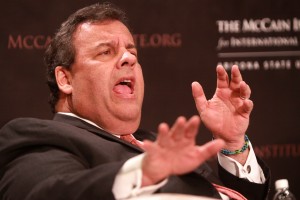
2010 proved to be a disastrous year for New Jersey transportation, with the state’s most pressing transportation challenge going unaddressed and with great leaps backward in policy. New Governor Chris Christie entered the year well aware that the state’s transportation system needed a long-term funding solution. The Transportation Trust Fund (which gets most of its revenue from the state gas tax and represents the state’s contribution to the NJDOT and NJ Transit capital programs) had been borrowed against for too long and would go bankrupt by July 2011.

NJ Transit riders packed a public hearing on planned fare hikes and service cuts in Newark in March.
Gov. Christie didn’t address the issue during 2010. But the tough budget environment hit transit riders in other ways, leading to major fare hikes and service cuts and the cancellation of the Access to the Region’s Core project, a rail tunnel between NYC and New Jersey that was necessary to increase service on the state rail system.
A Tough Year for Transit Riders
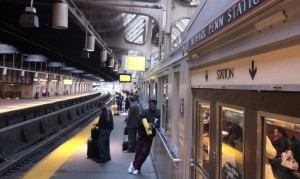
To say it was a tough year for transit riders in New Jersey would be an understatement. The new governor opened the year by cutting state support for NJ Transit by 11%. A proposal for a 25% fare increase and huge service cuts soon followed. Thousands of riders protested at public hearings and sent messages to state politicians, and NJ Transit eventually lowered the fare hike for local bus and light rail riders to 10% while keeping the 25% hike for commuter trains and buses. But the increase was still the largest in a generation.
In May, NJDOT Commissioner Jim Simpson revealed that the Christie administration had backed away from a financial commitment to a planned bus rapid transit and PATCO rail extension project in South Jersey.
But this was just a sneak preview of one of the largest stories of the year — the cancellation of the ARC Tunnel. As recently as April, the governor was calling the ARC Tunnel “critical for the transit riders of New Jersey” and standing squarely behind the project, which represented the culmination of 20 years of planning and was the largest transit project in the nation. But in September he suspended new work on the project for 30 days, supposedly to review project costs.
Many observers, however, had an alternate theory: that killing the tunnel could be a means to shore up the Transportation Trust Fund. NJ Transit Executive Director Jim Weinstein admitted as such, telling state legislators that cancelling the project could be a way to do so. The governor was urged to reconsider this short-sighted decision by broad swathes of the state’s civic, labor, business, and environmental communities, and Christie delayed making a decision as thousands of New Jerseyans came out to support the project. USDOT Secretary Ray LaHood flew down and set up last-minute federal-state discussions to try and salvage the project. But after delaying a decision again, Gov. Christie rejected several offered financing options.
On October 27, the governor made the decision official, effectively precluding any major improvements to the rail network for at least the next 20 years. Doing so also put the state on the hook to repay $271 million in federal funds that had been spent on the project. The federal government has since reduced that amount, and the state has hired a D.C. law firm to try and lower the bill further.
Toll Road Widenings Advance
Even as major transit projects languished, the Christie administration borrowed billions of dollars to advance major road widening projects. Both the Garden State Parkway widening (between mileposts 63 and 80) and NJ Turnpike widening (6-8A), which the Corzine administration broke ground on, advanced further under Gov. Christie.
» Continue reading…