Progress Being Made on the Region’s Most Dangerous Roads

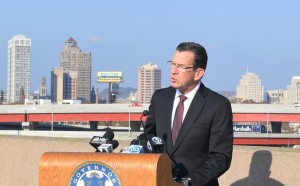
ConnDOT officials will target pedestrian safety improvements at the section of Post Road East near the popular Shake Shack restaurant in Westport. | Photo: The Hour

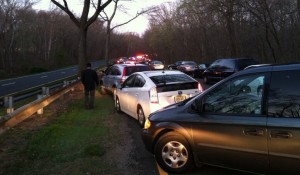
Operation 130 Safe Passage aims to address pedestrian safety along New Jersey’s most dangerous road. | Photo: Burlington County Times

Since the release of TSTC’s most recent Most Dangerous [...]

Connecticut’s Legislative Session Makes Progress on Funding and Regionalism, but not on Safety

Vulnerable User bill SB-191 unanimously passed the Senate behind the efforts of State Senator (and bicycle commuter) Beth Bye, but it did not receive a vote in the House.

Vulnerable User bill SB-191 unanimously passed the Senate behind the efforts of State Senator (and bicycle commuter) Beth Bye, but it did not receive a vote in the House, despite the determined efforts of the bill’s lead House Sponsor, Rep. Roland Lemar. | Photos: CT  Senate Democrats/Facebook, housedems.ct.gov

During the hectic close to Connecticut’s legislative session, which ended on June 5, the General Assembly passed needed legislation to protect against transportation budget raids. But legislators again failed to pass “vulnerable user” legislation that would have improved street safety for pedestrians, cyclists and others.

Transportation Funding

As MTR has reported, the General Assembly passed language restricting the use of the state’s Special Transportation Fund for transportation purposes. In a statement, Tri-State Transportation Campaign Executive Director Veronica Vanterpool said the measure was “encouraging” and would help “restore public trust.” Transit for Connecticut Coordinator Karen Burnaska said it “should help stabilize funding for transit and reassure Connecticut citizens that their tax dollars are being used wisely.”  Unfortunately, the lockbox bill will do nothing to prevent the 2014-15 budget, also passed last week, from raiding nearly $110 million from the Special Transportation Fund.

While measures to allow tolls garnered plenty of media attention earlier in the year, none advanced. Lawmakers had moved a bill calling on the Connecticut Department of Transportation (ConnDOT) to study a statewide tolling system, as well as a bill to allow tolls just for the extension of Route 11 in southeastern Connecticut, even though it is unlikely that tolls could cover the cost of the estimated $1.5 billion project.

Legislators did not pass a proposal to eliminate the local property tax on cars, which brings in about $500 million annually in revenue for municipalities. In an editorial, the Hartford Courant argued that while there may be a need to reform the car tax, “if the state is trying to promote the use of transit,” it doesn’t make sense to end the tax completely.

In addition, proposals from Governor Malloy to provide funding for deficient local bridges and speed up local transportation projects were both included in the state’s bonding bill (SB975) and passed.

» Continue reading…

Unified Business Message Needed for Federal Transit Advocacy

Good Jobs First’s recently-released report, “Bosses for Buses,” finds a schism in business support for transit.  At the local level, non-profits such as universities and hospitals, as well as local business coalitions largely recognize the importance of transit investment, pushing “state and local ballot initiatives for transit [that] consistently win more than 70 percent of [...]

CT Budget Raids Transportation Funds — for the Last Time?

This week, the Connecticut General Assembly passed lockbox legislation restricting monies in the Special Transportation Fund for transportation purposes. | Photo: CTPost.com

On Monday night, the Connecticut General Assembly narrowly approved the two-year $37.6 billion state budget for fiscal years 2014 and 2015, which transfers nearly $110 million from the state’s dedicated Special Transportation Fund into the [...]

Is There a Better Answer for Hartford’s Flower Street?

Flower Street connects Capitol and Farmington Avenues in Hartford.

Residents of Hartford’s Frog Hollow neighborhood and cycling advocates have emerged victorious in a long-running dispute with the Connecticut Department of Transportation (ConnDOT). The agency had planned to close Flower Street, a side street that crosses an Amtrak rail line and the planned CTfastrak [...]

Improved Transportation Choices Key to Reducing Suburban Poverty

Across the United States, the suburbs have often been synonymous with affluence. But a new publication from Brookings titled Confronting Suburban Poverty highlights that “the poor population in America’s suburbs is growing faster than anywhere else in the country, surging 64 percent in the past decade [...]

Increased Focus on Pedestrian Safety around Transit Needed in Connecticut and Nassau County

Connecticut Pedestrian Fatalities 2009-2011 within ¼ mile of a CT Transit Bus Stop. Orange dots represent 2009-2011 pedestrian fatalities on roads where pedestrians allowed within ¼ mile from a CT Transit stop. CT Transit bus stop file from CT Transit; map created in ArcMap with a Streets basemap. Pedestrian fatality data from NHTSA’s FARS database.

Connecticut Pedestrian Fatalities 2009-2011 within ¼ mile of a CT Transit Bus Stop. Orange dots represent 2009-2011 pedestrian fatalities on roads where pedestrians allowed within ¼ mile from a CT Transit stop. CT Transit bus stop file from CT Transit; map created in ArcMap with a Streets basemap. Pedestrian fatality data from NHTSA’s FARS database.

Note: In May 2012, TSTC published an analysis that examined pedestrian fatalities from 2008 through 2010 in Nassau County and Connecticut in relation to their proximity to Long Island Bus (now Nassau Inter-County Express) stops or CT Transit bus stops. This MTR post features a refined methodology, as well as information on 2011 pedestrian fatalities, the most up-to-date information available from the National Highway Traffic Safety Administration’s Fatality Analysis Reporting System database.

 Nassau County Pedestrian Fatalities 2009-2011 ¼ mile from a Long Island Bus Stop. Yellow dots represent 2009-2011 pedestrian fatalities on roads where pedestrians allowed within ¼ mile from a Long Island Bus stop. Long Island Bus stop file from Steven Romalewski of Spatiality; map created in ArcMap with a Streets basemap. Pedestrian fatality data from NHTSA’s FARS database.

Nassau County Pedestrian Fatalities 2009-2011 within ¼ mile of a Long Island Bus Stop. Yellow dots represent 2009-2011 pedestrian fatalities on roads where pedestrians allowed within ¼ mile of a Long Island Bus stop. Long Island Bus stop file from Steven Romalewski of Spatiality; map created in ArcMap with a Streets basemap. Pedestrian fatality data from NHTSA’s FARS database.

Getting to and from the bus stop shouldn’t be a dangerous activity, but for pedestrians in Connecticut and Nassau County, Long Island, it might be. In an examination of pedestrians killed by vehicles in Connecticut and Nassau County, TSTC found that large percentages – from 43 percent to almost 89 percent – of pedestrians killed by vehicles on roads where pedestrians are allowed were struck within 1/4 mile of a bus stop.

TSTC’s analysis of Connecticut pedestrian fatalities on roads where pedestrians are allowed shows that from 2009 through 2011, 43.2 percent of pedestrians killed by vehicles were killed within 1/4 mile of a CT Transit bus stop. Between 2008 and 2010, 54.1 percent of pedestrians killed by vehicles were killed within 1/4 mile of a CT Transit bus stop.

The analysis looks at six of CT Transit’s eight regional divisions: Hartford, New Haven, Stamford, New Britain, Waterbury and Meriden. (CT Transit was unable to provide bus stop information for its Bristol or Wallingford divisions.) Including CT Transit bus stops for Bristol and Wallingford, as well as information on bus stops in districts served by other transit agencies (such as Housatonic Area Regional Transit or Greater Bridgeport Transit), would likely increase the percentage of pedestrian fatalities located near transit.

Looking at pedestrian fatalities that occurred within 1/4 mile of a Long Island Bus route[1] in Nassau County shows even more stark results: 88.5 percent of pedestrians killed by vehicles on roads where pedestrians are allowed were within 1/4 mile of a Long Island Bus stop from 2009 through 2011; 63.9 percent between 2008 and 2010.

It’s unclear whether most or any of these fatalities were transit riders, but every transit trip begins with a walking trip, and streets around bus stops or railroad stations tend to have more pedestrian activity – people waiting for a buses or headed to or from a transit facility – than streets without transit. State and municipal departments of transportation must ensure that streets around transit facilities are safe and accessible for pedestrians.

In its efforts to make Hempstead Turnpike safer for pedestrians, the New York State Department of Transportation and NICE have partnered to relocate certain bus stops along the corridor. This partnership can’t end here however, and NYSDOT should continue to work with NICE and Nassau County (and Suffolk County) to develop an Island-wide Safe Routes to Transit program, which would focus on pedestrian safety needs near transit. This partnership should go beyond bus stop relocations and identify additional traffic calming infrastructure that could enhance the safety of anyone who travels in the area—transit users, pedestrians, cyclists and motorists alike.

Connecticut can also do more to promote pedestrian safety at and around transit locations with a program similar to New Jersey DOT’s Safe Streets to Transit program, which targets grants to municipalities to make access to transit safer for pedestrians.

» Continue reading…

Tri-State, AARP, City of Bridgeport Walk for a Better East Main Street

Bridgeport Mayor Bill Finch (at right) observes conditions on East Main Street with with Connecticut AARP State Director Nora Duncan. Walking behind them are (from right) AARP volunteer Mike Klein, Bridgeport City Councilwoman Lydia Martinez, and Bridgeport Director of Social Services Iris Molina. | Photo: TSTC

Yesterday, Bridgeport Mayor Bill Finch, City Councilwoman [...]

Unprecedented Bicycle Infrastructure Project Planned for New Haven Suggests a Changing Mindset at ConnDOT

As part of the Pearl Harbor Memorial Bridge (or “Q” Bridge) project, a protected cycle track and off-road path will be built on Water Street, across the Tomlinson Bridge, and onto Forbes Avenue. This is a concept drawing of Water Street.

An agreement between the City of New Haven and the Connecticut Department [...]

Action Alert: Keep CT Vulnerable User Bill Moving

Visit BikeWalkCT’s website to learn how to take action.

Connecticut’s vulnerable user bill (SB191), which would toughen penalties for careless drivers who injure or kill pedestrians, cyclists, highway workers, animal riders and other vulnerable users of the state’s roadways, continues to move forward as the Connecticut General Assembly enters its final stretches. With [...]